For the reliable installation of FTP panels, we offer metal profiles with a thickness of 0.45–0.5 mm. The recommended length of the product is 2–3 meters, depending on the height of your building's facade. To ensure a flawless appearance, it is best to use solid, seamless profiles along the entire height of the corner without unnecessary joints.
It would seem that there is nothing stronger and stronger than steel. At first glance, plastic loses to metal. But in practice, the durability of the cladding depends rather not on the material, but on the quality of the siding panels. Also, the characteristics are influenced by the production technology, the conscientiousness of the manufacturer and the operating conditions. Let's look at two types of siding: metal and vinyl.
Finishing the facade of the house is the last stage of construction. Once upon a time, lining or plaster was used for finishing material, but after a while their quality is violated. Because of this, the building had to be refurbished every few years. Builders have long wanted to find a finishing material that would allow the walls of the building to always look neat and stylish without losing their characteristics. And he was found - this is vinyl siding.
When choosing materials for cladding, each owner of suburban housing is guided by his own considerations and tastes. Someone traditionally upholsters the house with a wooden clapboard, someone prefers more solid and heavy structures made of stone. However, as more people choose vinyl siding, PVC is becoming more popular.
The modern market of roofing materials offers a huge selection of coatings for roofing. According to the type of waterproofing layer, appearance and size of the roof elements, they are divided into 5 main types: rolled, mastic, membrane, sheet and type-setting. In addition, roofs can be divided into two large groups: roofs for urban construction and roofs for suburban low-rise construction.
Installation of facade panels – maybe the most important step in renovating your booth. In case of correct installation, lay not only the old look, but also the protection of the main material, but also a guarantee. Let's hope that 50 years of service can be secured only with the correct installation of facade panels. It's a pity, deyakі vlasniki budinkov, trying to save, entrust the installation to non-professional workers, as it is often necessary not to read the recommendations we have specially provided for the installation of facade panels. As a result – thermal gaps are not secured, tightly screwed to the facade of the panel, so that they cannot expand and sound under the influence of temperatures. One of the widest pardons during the installation of facade panels is the lack of grating.
How to choose a flexible tile? Which is better? This question can arise before every person who decides to use flexible tiles as roofing. When choosing a soft tile, you can operate with many characteristics, choose different types of bitumen and dressings, and at the same time you will not get the only correct solution, because. The debate about which is better is still going on.
It is easy to forget about cracked paint, crumbling plaster or damp lining, you just need to choose facade panels as the material for the exterior of the house. Vinyl, metal, clinker, acrylic and other plates have proven themselves from the best side and rightfully won the respect of the owners of private cottages all over the world. However, it is not enough to correctly calculate the number of panels, correctly mount the crate and hang the plates, you need to choose the right color for the facade panels, because the appearance of the house is a criterion for success and an indicator of the taste of its owner.
The birthplace of flexible tiles is considered to be North America. Approximately about 100 years ago, the first material appeared, resembling modern shingles.
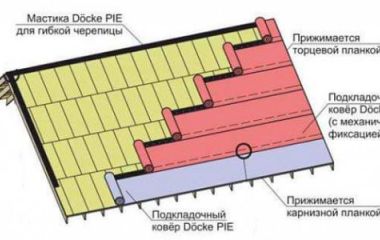
In accordance with the norms of SP 17.13330.2017 (SNiP II-26-76 Roofs), the structure of the roofing pie for flexible tiles assumes the presence of a lining carpet between the rafter system and the tiled roof.
Over the past centuries, the architecture of the cities of the world has changed repeatedly, which was facilitated by fashion trends, the prevailing cultures and religions at that time, available building materials and their installation technologies. However, from century to century, most of the architectural changes concerned only the "box" of buildings, while the roof structure remained practically the same - but why?